America 250 and The Road to Knoxville
How Revolutionary War veterans and pioneers claimed a new land, founded a new city, and forged a new state on the western frontier
Symposium and New Booklet
Friday, October 2, 8:30 a.m. – 4:00 p.m.
at the East Tennessee History Center, 601 S. Gay Street
Cost is $20 per person, including drinks, snacks, buffet lunch and a free copy of new booklet, “The Road to Knoxville,” especially produced by KHP for this event.
Register HERE. Deadline has passed and we are SOLD OUT.
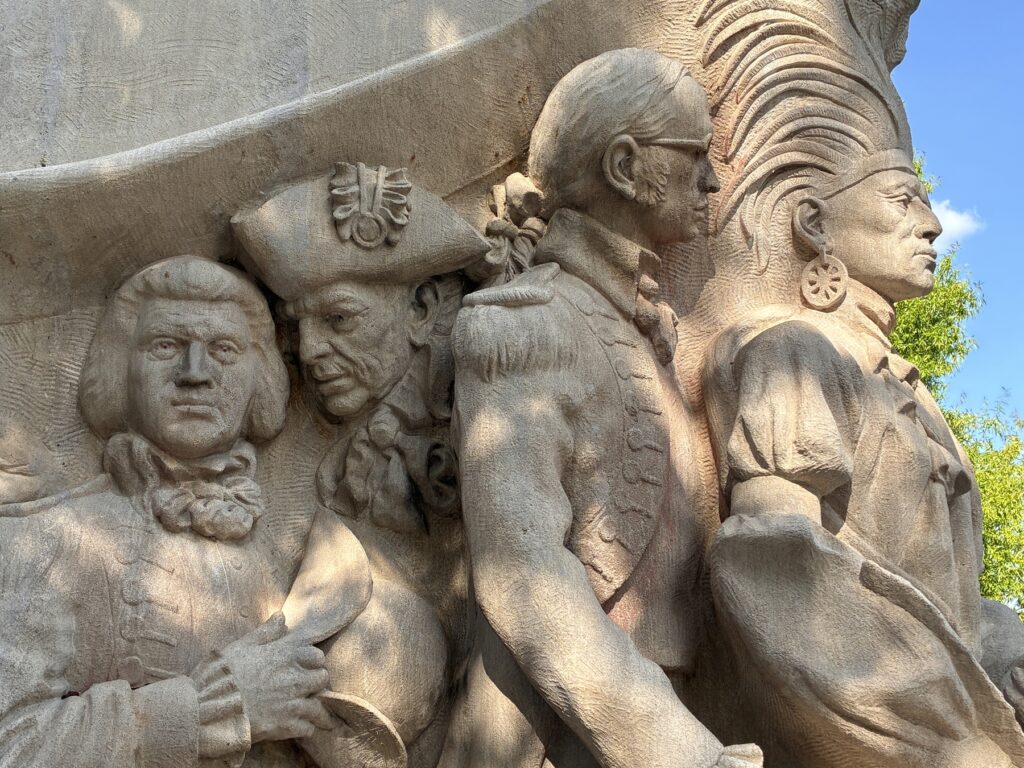
Commemorating America’s 250th anniversary and Knoxville’s 235th birthday, the Knoxville History Project will a full day of programming featuring Knoxville historians and archivists to present a new look at the key events that unfolded, and the key players who settled in this region during the mid-late 1700s when the landscape was rapidly transitioning from Native American hunting grounds, to land claimed by settlers, and the emergence of new states; and changes that fueled hostilities between the settlers and Native Americans. Speakers will highlight a broader array of known characters and events, expanding the story beyond the usual list of government officials and settlers, who are typically associated with Knoxville’s founding story.
We are most grateful for the generous support from our grant funders and sponsors:

Partnering Organizations:
Special thanks to the East Tennessee Historical Society for hosting this event.
Symposium Program:
8:30-9:00 Coffee Reception / Welcome & Overview (sponsored and hosted by the Historic Homes of Knoxville)
9:05-10:00 Borderlands and Consequences: From Revolutionary War to Southwest Territory: A conversation with Dr. Warren Dockter and Dr. Chris Magra who will discuss the increasing tensions and clashes on the frontier, including the British Royal Proclamation of 1763, the Cherokee Indian Wars (1776-1794), the Watauga Association (1772-1775), the Land Grab Act of 1783, state of Franklin (1784-1788); and other events leading up to the establishment of the Southwest Territory in 1790 and the Treaty of Holston in 1791.
10:00-10:15 Break
10:15-11:15 Cherokee Women, Warfare, and Resilience in the Early American Republic with Dr. Brooke Bauer who will examine Cherokee women’s experiences of warfare, captivity, land dispossession, and resilience during the American Revolution era and the Chickamauga Wars, roughly 1776–1794. While Nan-ye-hi/Nancy Ward is recognized as an important Cherokee woman leader and peace advocate, Dr. Bauer will argue that focusing too heavily on her can obscure the broader experiences of unnamed Cherokee women who defended families, homes, and land.
11:15-noon Lunch Break / Explore “Lines Were Drawn: The Treaty of Holston and its Legacy” exhibition
Noon-1:00 KEYNOTE ADDRESS: The Road to Knoxville with Jack Neely. Unlike many towns of its era, the first Knoxvillians had no common background. Founded by President George Washington’s administration, Knoxville was a territorial and state capital—one of only 16 capitals in America—and attracted ambitious young people from all over the new republic, people who had lived in Philadelphia, Boston, Charleston, New York. Some were veterans of Washington’s Continental Army, while dozens were immigrants from overseas, a few of them just learning English. Others were enslaved. They had different religious and political backgrounds, different values, different motives, different dreams—and different accents. Jack Neely will talk about the diverse population of the makeshift capital, as we try to picture life in this tiny but unpredictable post-Revolutionary city.
1:00-1:15 Break
1:15-2:00 Knoxville in the Capital Era with Paul James who, since few records describe what the fledgling frontier settlement looked like when Knoxville was founded in 1791, will share memories of a few early settlers, descriptions from J.G.M. Ramsey’s Annals of Tennessee (1853) and local newspaper accounts, that collectively offer a fresh look at the city throughout the “capital” era: 1791-1818, including several sites that help provide a fuller view of the city’s early years, including Deveraux Gilliam’s Station, Lebanon in the Forks Cemetery, Iredell, and Chisholm’s Tavern.
2:15-2:30 Break
2:30–3:30 Mapping the Frontier with Eric Dawson, Zachary Keith and Kevin Bogle will highlight a selection of rare and cherished maps and frontier-era documents that exist in the Calvin M. McClung Collection and the Knox County Archives, and present “The Origins of Knoxville Story Map,” a new online resource highlighting the early days of Knoxville and some of the town’s first inhabitants who purchased the original 64 lots sold by Capt. James White in the 1791 lottery.
3:30 – 4:00 The Revolutionary War Veteran Project with Marilyn Childress who serves as the president of the Veteran’s Heritage Site Foundation’s Revolutionary War Veteran Project that honors veterans by locating their graves, describing their roles in the War, and their lives in East Tennessee. Highlighted will be several notable Knox County veterans including James White, Alexander Cavett, Samuel Flenniken, and others.
4:00pm Conclusion/Final remarks.
Note: the Historic House Museums social at Maple Hall has been cancelled, but reps from this local organization will be on hand during the breakfast social.
Speaker Bios:
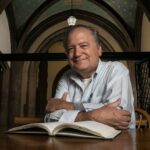 Jack Neely is the founding executive director of the Knoxville History Project. For more than 20 years, he researched and wrote the “Secret History of Knoxville” for the alternative weekly, Metro Pulse. He is also the author of Market Square: The History of the Most Democratic Place on Earth (2009), The Tennessee Theatre: A Grand Entertainment Palace (2015), Historic Knoxville: The Curious Visitors Guide (2018), Knoxville’s Old City: A Short History (2019), and many others.
 Dr. Warren Dockter is the President and CEO of the East Tennessee Historical Society. He brings to ETHS an extensive knowledge and passion for history, experience in public engagement, including work with the International Churchill Society, British Institute of Ankara, and Aberystwyth University. His publications include Churchill and the Islamic World: Orientalism, Empire and Diplomacy in the Middle East (I.B Tauris, 2015), and Winston Churchill at the Telegraph (Aurum, 2015). Dr. Dockter is a board member of the Tennessee Historical Commission, and currently serves as Vice Chair of the Tennessee Commission for the United States Semiquincentennial commemoration.
 Dr. Chris Magra is a Professor of Early American history at the University of Tennessee and serves as the Director of UT’s Center for the Study of Tennesseans and War.
He has published three books on the American Revolution. His latest publication is America’s First War, an edited collection of essays on the military history of the Declaration of Independence (UT Press, 2026.).
 Dr. Brooke Bauer is an associate Professor of American History at the University of Tennessee. Her book, Becoming Catawba: Catawba Women and Nation-building, 1540-1840 (University of Alabama Press, 2022) examines the vital role of women, mothers, providers, and protectors, and they created, promoted, and preserved a Catawba identity and helped build a nation.
 Marilyn Childress, a U.S. Navy veteran (1972-1975), is the president of the Veterans Heritage Site Foundation and actively involved with numerous veterans and historic organizations, including Veterans Council of East Tennessee, Tennessee Tri-Stars and Stripes Commission, Friends of Cavett Station, Historic Ramsey House, East Tennessee Women Veterans Network; Wreaths Across America, and more.

Eric Dawson is Manager of the Knox County Public Library’s Calvin M. McClung Historical Collection at the East Tennessee History Center. Previously he was audio-visual archivist and director of the Tennessee Archive of Moving Image and Sound (TAMIS). He writes on regional film and music history and makes films with archival footage, including Electric Appalachia and Suttree.

Zachary Keith is the digital archivist at the Knox County Archives having previously worked for the Calvin M. McClung Historical Collection and the Tennessee State Library and Archives where he co-managed the map collection. Additionally, he has experience with several geographic information system (GIS) applications on urban renewal, Revolutionary War pensioners, as well as curating a digital collection on the Highlander Folk School.
 Kevin Bogle is a library reference assistant with the Calvin M. McClung Historical Collection. Previously, he served as a Communications Specialist at University of Tennessee’s Hodges Library, and before that as a radio DJ in California. Kevin has extensive experience with genealogical research and processing archival collections and using digital tools to visualize historical and genealogical information.
 Paul James is the director of publishing and development for the Knoxville History Project and is the author Ijams Nature Center (Arcadia Publishing, 2010), and Downtown Knoxville (Arcadia Publishing, 2022) with Jack Neely. He has also written articles for Smokies Life, The Tennessee Conservationist, and City Lifestyle Magazine. His monthly column, “Ghostwalking the Streets of Knoxville” is published on InsideofKnoxville.com. Previously, he served as executive director at Ijams Nature Center for 12 years.
- PARTNERS
-

-

-

-

-

-